 Arveno Growth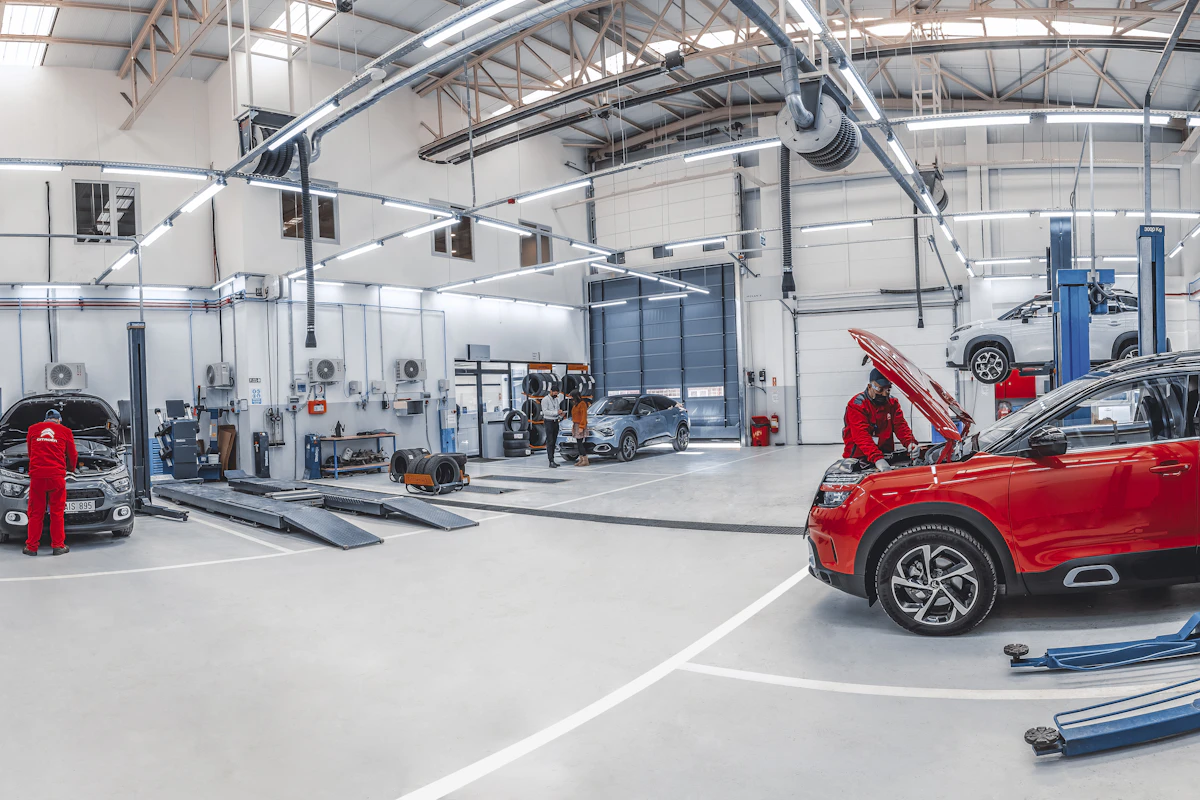
Start with the searches your shop can serve
“Auto repair shop near me” is a broad need. A driver may actually be looking for brake inspection, engine diagnostics, tire service, fleet maintenance, or help with a warning light. The useful work starts by listing the repairs and maintenance services your technicians perform, the vehicles you accept, and the appointments you can take. Use the language customers understand, then answer the questions your service advisors hear every week.
Search results vary by the person’s location and the query. A shop cannot make itself locally relevant to every town in the country by adding place names to its pages. The goal is accurate information for the communities it truly serves and a clear route to an appointment.
Make the Google Business Profile accurate
Claim and manage the profile for the real shop location. Use the business name customers see on signage and other real-world materials; do not add service keywords or city names to the name field unless those are genuinely part of the business name. Choose the fewest accurate categories needed to describe the core business, keep contact details and customer-facing hours current, and link to a page that represents that specific shop.
An auto repair shop with a garage where customers bring vehicles is different from a mobile mechanic that travels to customers. Google permits eligible hybrid businesses to show a staffed customer-facing location and a service area; a mobile service business should represent its real operating base and service area accurately. Never use a virtual office, a rented mailbox, or a string of duplicate profiles to imply local presence.
Google’s Business Profile guidelines explain eligibility, names, categories, addresses, and service-area representation. Its local guidance describes relevance, distance, and prominence as the main considerations, so a profile update cannot override how far away a searcher is.
Describe services in the profile and on your website
List the services the shop actually provides and keep them consistent with the website. A services menu can help customers understand the work available, but it should be complete enough to represent the shop rather than a short set of keyword phrases. Avoid claiming certifications, warranty coverage, dealer status, or vehicle-brand expertise unless the shop can substantiate them.
For the website, make the location, phone number, hours, and appointment process easy to find on mobile. A dedicated page for a genuinely important service can explain symptoms, inspection steps, accepted vehicles, warranty limitations, and what the customer should bring. If work requires diagnosis, say so rather than presenting a fixed price that the shop cannot honor without inspecting the vehicle.
Use a distinct location page only when a real staffed shop exists there and the page gives customers practical local information. For a single shop, a strong service page and accurate contact information are usually more useful than separate pages for every neighborhood. Our guide to service-area pages explains when location content helps and when it becomes repetitive.
Build trust with real photos and honest reviews
Show actual images of the shop exterior, service bays, team, equipment, and customer-facing areas where you have permission. They help drivers recognize the location and understand the business before they call. Label licensed stock photography accurately; stock images should not be presented as your shop, technicians, repairs, or customer vehicles.
Invite customers to leave an honest review after a completed service. Do not offer incentives, ask only happy customers, pressure people to change a negative review, or post reviews on a customer’s behalf. Respond professionally without disclosing personal or vehicle information. Google’s Maps user-contributed content policy sets rules for reviews and prohibited engagement.
Measure enquiries through completed repair work
Use the Business Profile performance report, website analytics, call tracking configured with customer expectations in mind, and the shop’s repair-order system to see how customers find and contact you. Separate profile calls, website calls, form submissions, first-time customers, booked appointments, attended visits, and completed repair orders. A click or phone ring is not the same as a qualified enquiry or a profitable job.
Ask the service advisor to record the requested service, whether the vehicle was accepted, the booking outcome, and how the customer heard about the shop. Review missed calls and after-hours enquiries. That operational feedback can reveal whether the issue is visibility, the booking path, unavailable capacity, or a mismatch between advertised and offered work.
In Search Console, compare the queries and pages that earn impressions with the pages you intended to serve those needs. Improve pages that answer the real customer question; do not split one topic across several near-identical pages to make the site look larger. See our guide to tracking service-business leads for a practical measurement framework.
Keep the foundation useful for search and AI answers
Search systems need accessible pages that explain who you serve, what work you perform, and how to contact you. Use descriptive page titles, useful headings, crawlable internal links, and accurate business details. Organization or local-business structured data can clarify visible facts when implemented correctly, but it does not create a local office, guarantee a rich result, or replace a verified profile. Google’s AI search guidance points back to normal SEO fundamentals; there is no special markup that guarantees an AI citation.
For a complete visibility review, connect local profile accuracy, service pages, mobile calls and booking, and lead follow-up. Our auto repair marketing page explains the services Arveno offers, and the local SEO service page describes the broader approach. We work remotely across the United States and Canada; that does not mean Arveno has a physical office in every city or can promise “near me” rankings.
Questions shop owners ask
Does adding more cities to my Google Business Profile make me rank everywhere?
No. A service-area setting should reflect where the business truly operates, and local results depend in part on the searcher’s location. It does not create offices or guarantee visibility across every city.
Should an auto repair shop create a page for every repair?
Create a page when it helps customers understand a real service the shop offers and answers distinct questions. Avoid thin pages that repeat the same copy with a different service keyword.
Can reviews guarantee better Google Maps rankings?
No. Reviews help customers evaluate a shop and are one part of its online presence, but no review count or rating guarantees a local position. Ask for honest feedback without incentives or filtering.
What should an auto shop track from local search?
Track calls and website enquiries through booked appointments, attended visits, and completed repair orders. Separate each stage so a click or call is not misreported as a sale.
Want a clear view of your shop’s search presence?
Request a free growth audit and tell us which services you want more customers to find.
See my growth options ↗